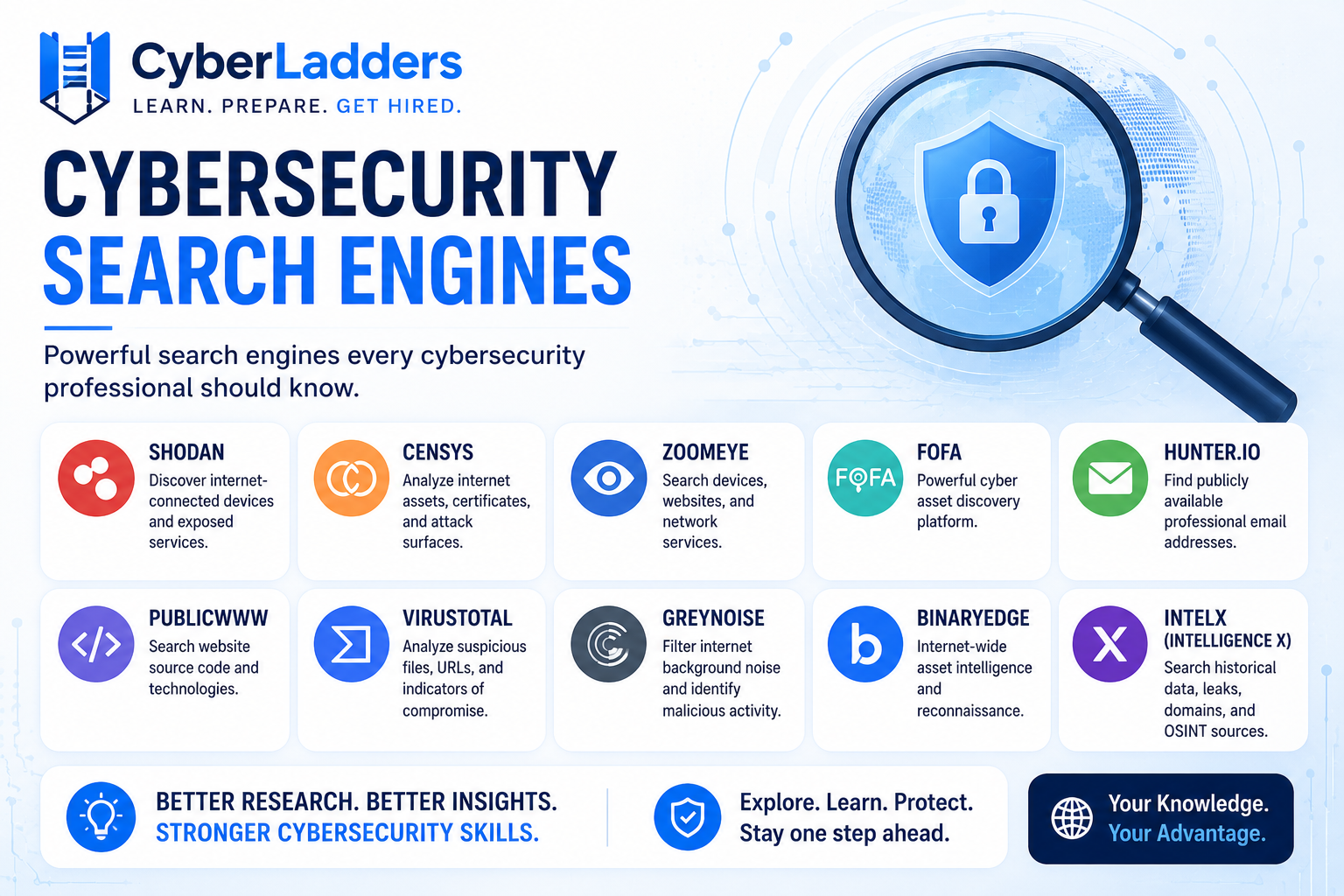
Beyond Google: The Search Engines Powering Modern Cybersecurity
When most people need information, they turn to Google.
However, cybersecurity professionals, threat hunters, OSINT researchers, ethical hackers, and security analysts often rely on specialized search engines designed to uncover internet-connected assets, analyze threats, investigate vulnerabilities, and perform security research.
Whether you’re starting your cybersecurity career or looking to enhance your research capabilities, mastering these cybersecurity search engines can significantly improve your effectiveness.
In this guide, we’ll explore the most powerful cybersecurity search engines and how they can help you build valuable skills in threat intelligence, reconnaissance, and security analysis.
Why Cybersecurity Professionals Use Specialized Search Engines
Traditional search engines are designed to find websites and content.
Cybersecurity search engines are designed to find:
✅ Internet-connected devices
✅ Exposed services
✅ Vulnerabilities
✅ Digital assets
✅ Threat intelligence indicators
✅ Domain and certificate information
✅ Publicly available security data
These tools help security professionals understand attack surfaces, identify risks, and perform investigations more efficiently.
1. Shodan
What is Shodan?
Shodan is often called the “Google of the Internet.”
Instead of indexing websites, Shodan indexes internet-connected devices and services.
What Can You Discover?
- Web servers
- IoT devices
- Industrial control systems
- Security cameras
- Firewalls
- Databases
- Cloud services
Why It Matters
Shodan helps security professionals identify exposed systems and understand how organizations present themselves on the public internet.
Best For
- Security Analysts
- SOC Analysts
- Threat Hunters
- Penetration Testers
2. Censys
What is Censys?
Censys continuously scans and maps internet-facing assets around the world.
It provides deep visibility into:
- IP addresses
- SSL certificates
- Domains
- Network infrastructure
Key Benefits
- Asset discovery
- Attack surface management
- Security research
- Certificate analysis
Best For
- Security Engineers
- Threat Intelligence Analysts
- Blue Team Professionals
3. ZoomEye
What is ZoomEye?
ZoomEye is a cybersecurity search engine that helps users identify devices, websites, and exposed services.
It functions similarly to Shodan while offering additional visibility into internet-facing infrastructure.
Common Uses
- Asset discovery
- Vulnerability research
- Reconnaissance activities
- Security monitoring
4. FOFA
What is FOFA?
FOFA is a powerful cyber asset discovery platform widely used by security researchers and red teams.
It allows users to search and analyze:
- Domains
- IP addresses
- Applications
- Technologies
- Internet services
Why Security Researchers Use FOFA
FOFA helps identify technologies running behind websites and internet services, making it useful for asset mapping and security assessments.
5. VirusTotal
What is VirusTotal?
VirusTotal is one of the most popular cybersecurity intelligence platforms.
It enables users to analyze:
- Files
- URLs
- Domains
- IP addresses
against dozens of antivirus engines and threat intelligence sources.
Common Use Cases
- Malware analysis
- Threat hunting
- IOC validation
- Incident response investigations
Why Every SOC Analyst Should Learn VirusTotal
VirusTotal is frequently used during security investigations and threat detection workflows.
6. GreyNoise
What is GreyNoise?
GreyNoise helps security teams distinguish between legitimate threats and internet background noise.
What It Does
It analyzes scanning activity occurring across the internet and helps security teams determine whether suspicious activity is truly malicious.
Key Benefits
- Threat prioritization
- Noise reduction
- Improved incident response
7. BinaryEdge
What is BinaryEdge?
BinaryEdge provides internet-wide asset intelligence and attack surface visibility.
Organizations use BinaryEdge to:
- Discover exposed assets
- Monitor infrastructure
- Identify vulnerabilities
Best For
- Attack Surface Management
- Security Operations
- Security Research
8. Intelligence X
What is Intelligence X?
Intelligence X is an advanced OSINT search engine.
It allows researchers to search:
- Historical records
- Domains
- Public data
- Technical indicators
Why It’s Popular
It brings together multiple sources of publicly available intelligence into a single platform.
Best For
- OSINT Investigators
- Threat Researchers
- Security Analysts
9. Hunter.io
What is Hunter.io?
Hunter.io helps locate publicly available professional email addresses associated with domains and organizations.
Common Uses
- Security awareness research
- OSINT investigations
- Business intelligence
10. PublicWWW
What is PublicWWW?
PublicWWW allows users to search website source code.
Useful For
- Technology identification
- Website analysis
- Digital footprint research
Security professionals often use PublicWWW to understand technologies used across websites and applications.
Which Cybersecurity Search Engine Should Beginners Learn First?
If you’re just getting started in cybersecurity, focus on:
1️⃣ VirusTotal
2️⃣ Shodan
3️⃣ Censys
4️⃣ GreyNoise
5️⃣ Intelligence X
These platforms provide excellent exposure to cybersecurity investigations, threat intelligence, and internet asset discovery.
How These Skills Help Your Cybersecurity Career
Understanding cybersecurity search engines can strengthen your skills in:
🔐 Security Operations (SOC)
🔐 Threat Hunting
🔐 Digital Forensics
🔐 Threat Intelligence
🔐 Vulnerability Management
🔐 Penetration Testing
🔐 OSINT Investigations
Recruiters increasingly value candidates who can perform practical security research and investigations using real-world tools.
How CyberLadders Helps You Become Job-Ready
At CyberLadders, we help aspiring cybersecurity professionals bridge the gap between learning and employment through:
✅ Cybersecurity Career Roadmaps
✅ Skill Gap Analysis
✅ Certification Guidance
✅ Resume Reviews
✅ Interview Preparation
✅ Hands-On Learning Recommendations
✅ Job Placement Assistance
Our goal is simple:
Help cybersecurity professionals gain the skills, confidence, and guidance needed to secure meaningful careers in cybersecurity.
Final Thoughts
Cybersecurity is not just about defending systems.
It’s about finding information, understanding threats, and making informed security decisions.
The professionals who know how to gather intelligence effectively often have a significant advantage in their careers.
Start exploring these cybersecurity search engines today and take your research skills to the next level.